Cabinet Refacing
Update your cabinets without a full replacement
New doors, drawer fronts, and hardware over your existing cabinet boxes, typically 30-50% less than full replacement, if the boxes are structurally sound.
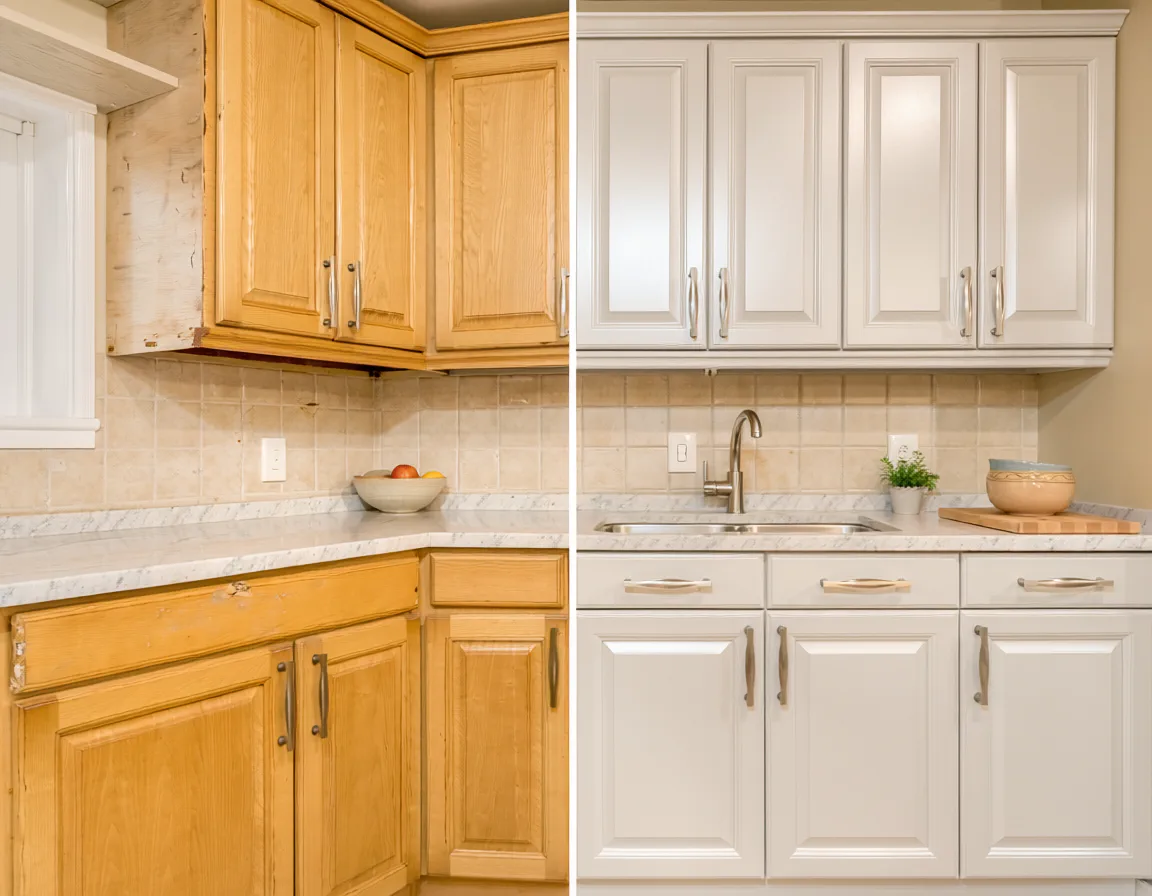
The practical middle option
Refacing is the practical middle option between living with dated cabinets and a full teardown. The process keeps your existing cabinet boxes in place and replaces what’s visible: new doors and drawer fronts, a new veneer surface on the boxes themselves, and new hardware. The layout stays the same, but the kitchen looks new. Refacing typically runs 30-50% less than a full cabinet replacement, and most projects complete in a few days rather than the multiple weeks a full replacement usually takes.
Choosing a veneer material that holds up in Florida
The veneer material decision has a real Florida-specific angle that’s worth understanding before committing to one. Thermofoil, a vinyl film heat-sealed over MDF, is the most affordable option and gives a smooth, clean finish, but it’s known to peel with sustained heat exposure. That’s worth weighing carefully in a warm-running Florida kitchen, not just near an oven or dishwasher, but in a home where ambient kitchen temperatures already run higher than in cooler climates. High-pressure laminate holds up better against both heat and moisture, which makes it a more dependable choice here even though it costs somewhat more than thermofoil. Real wood veneer sits at the top end, offering natural grain and, when properly applied, 15 to 20 years of service life.
Is refacing right for your cabinets?
That said, refacing has a real limitation worth being upfront about: it only works if your existing cabinet boxes are structurally sound. Refacing is a cosmetic and hardware update, not a structural repair, it can’t fix warped, water-damaged, or sagging boxes, and it won’t address mold if there’s any present. In a Florida kitchen specifically, years of humidity exposure are exactly the kind of thing that can leave cabinet boxes in questionable structural shape even when the surface still looks fine at a glance.
Good candidates for refacing: the layout works, the boxes are solid, but the finish, door style, or hardware feels dated. Not good candidates: visible warping, water staining, sagging shelves, or a layout that no longer fits how the kitchen actually gets used, those situations call for replacement cabinetry instead of refacing.
We evaluate the existing cabinet boxes as part of every refacing consultation and give a straight recommendation, refacing where it makes sense, replacement where the boxes don’t support it. See our cost guide for how refacing compares to a full replacement project.
What's included
Every refacing project starts with an honest look at what's underneath the current finish.
Cabinet box evaluation
A straight recommendation, refacing where it makes sense, replacement where the boxes don't support it.
New door and drawer fronts
Updated style and material over the existing layout.
New veneer surface
Applied to the existing, structurally sound cabinet boxes, in real wood, laminate, or thermofoil.
New hardware
Hinges, pulls, and handles updated as part of the same project.
Minor box adjustments
Small corrections to existing boxes where structurally sound.
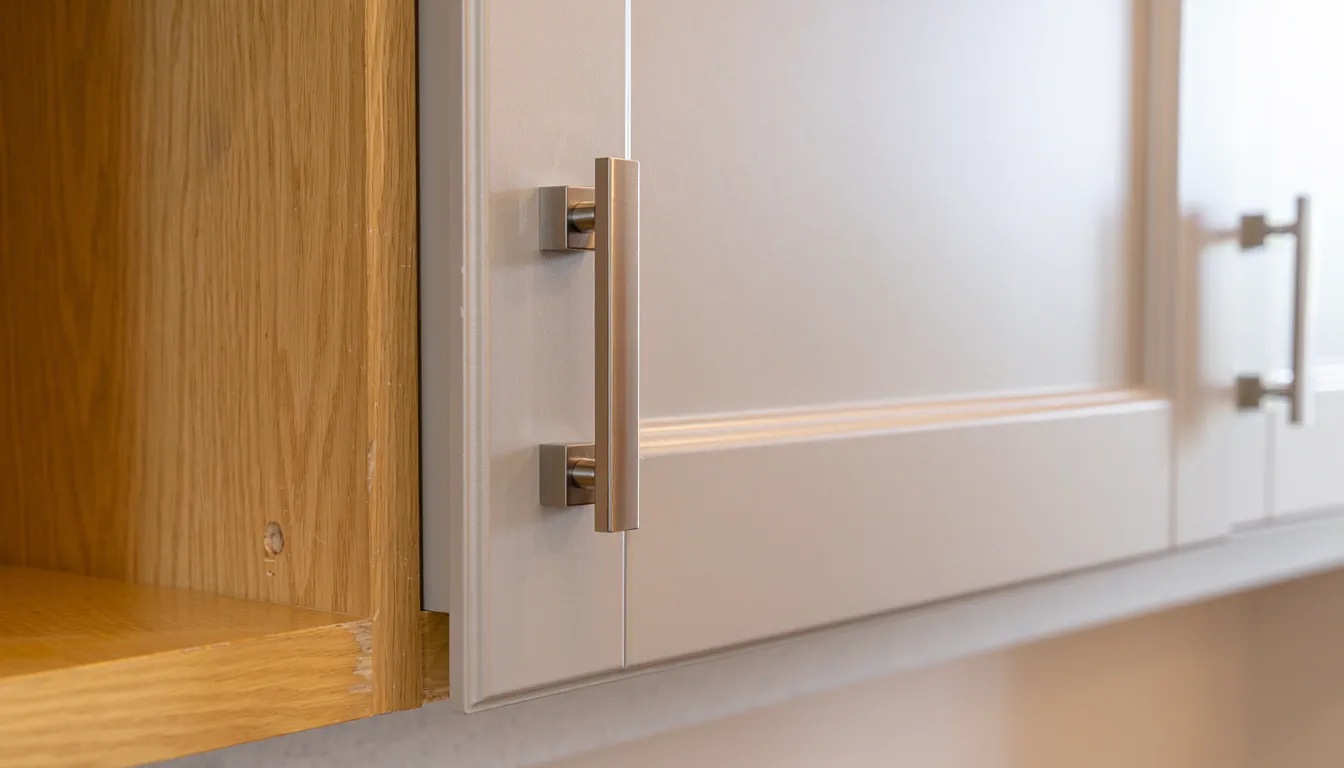
Built for the coast
Choosing the right refacing material
Refacing comes down to three material choices, and they don't perform equally in a Florida kitchen.
- Real wood veneer
- Thin slices of actual wood, stainable and finished like solid wood. Properly applied, it commonly lasts 15-20 years and gives the most natural look of the three options.
- High-pressure laminate
- Layers of resin-soaked material bonded under high pressure. More resistant to heat and moisture than thermofoil, which makes it a better fit near ovens, dishwashers, and in a warm Florida kitchen generally.
- Thermofoil
- A vinyl film heat-sealed over MDF. Affordable and smooth, but prone to peeling with sustained heat exposure, worth weighing carefully for a kitchen that runs warm, whether from appliances or Florida's ambient heat.
- Structural condition
- Whatever veneer material is chosen, it only goes over cabinet boxes that are structurally sound. Warped, water-damaged, or moldy boxes need replacement, not a new surface.
Budget
What cabinet refacing costs in Sarasota
Refacing typically runs 30-50% less than a full cabinet replacement, well below the site's $2,807-$12,965 typical range for a full custom cabinetry project. Actual cost depends on kitchen size and the veneer material and hardware chosen.
See our cost guide for how refacing pricing compares to full replacement and to our other services.
Read the full Sarasota cost guideCommon questions
- How much does cabinet refacing cost?
- Typically 30-50% less than a full cabinet replacement, well below the site's $2,807-$12,965 typical range for a full custom project. Actual cost depends on kitchen size and the veneer material and hardware chosen.
- How long does cabinet refacing take?
- Most projects complete in a few days, versus the multiple weeks a full replacement usually takes.
- Can any cabinets be refaced?
- No, only cabinets with structurally sound boxes. Warped, water-damaged, or moldy boxes need replacement instead; refacing is cosmetic, not structural.
- What's included in a refacing project?
- New doors, drawer fronts, a new veneer surface on the existing boxes, and new hardware.
- What's the difference between wood veneer, laminate, and thermofoil?
- Real wood veneer gives the most natural look and lasts 15-20 years when properly applied. High-pressure laminate is more heat- and moisture-resistant, a good fit for a warm Florida kitchen. Thermofoil is the most affordable but can peel with sustained heat exposure.
- Is refacing a good option for a Florida kitchen specifically?
- Conditionally, yes, with the same structural caveat. If years of humidity exposure have already damaged the boxes, refacing won't fix that underlying issue, so we'll recommend replacement instead in that situation.
- Will refacing let me change my kitchen's layout?
- No. Refacing keeps the existing layout. If you want to change the layout, that requires replacement.
Where we work
Sarasota and Manatee County, from the barrier islands to the inland communities east of I-75.
- Siesta Key
- Palmer Ranch
- Lakewood Ranch
- Lido & Longboat Key
- Downtown & West of Trail
- Osprey & Nokomis
- Venice
- Gulf Gate
- Bee Ridge