Built-Ins
Built-ins made to look original to the house
Entertainment centers, media walls, home libraries, and window seats matched to your home's existing trim and architectural style.
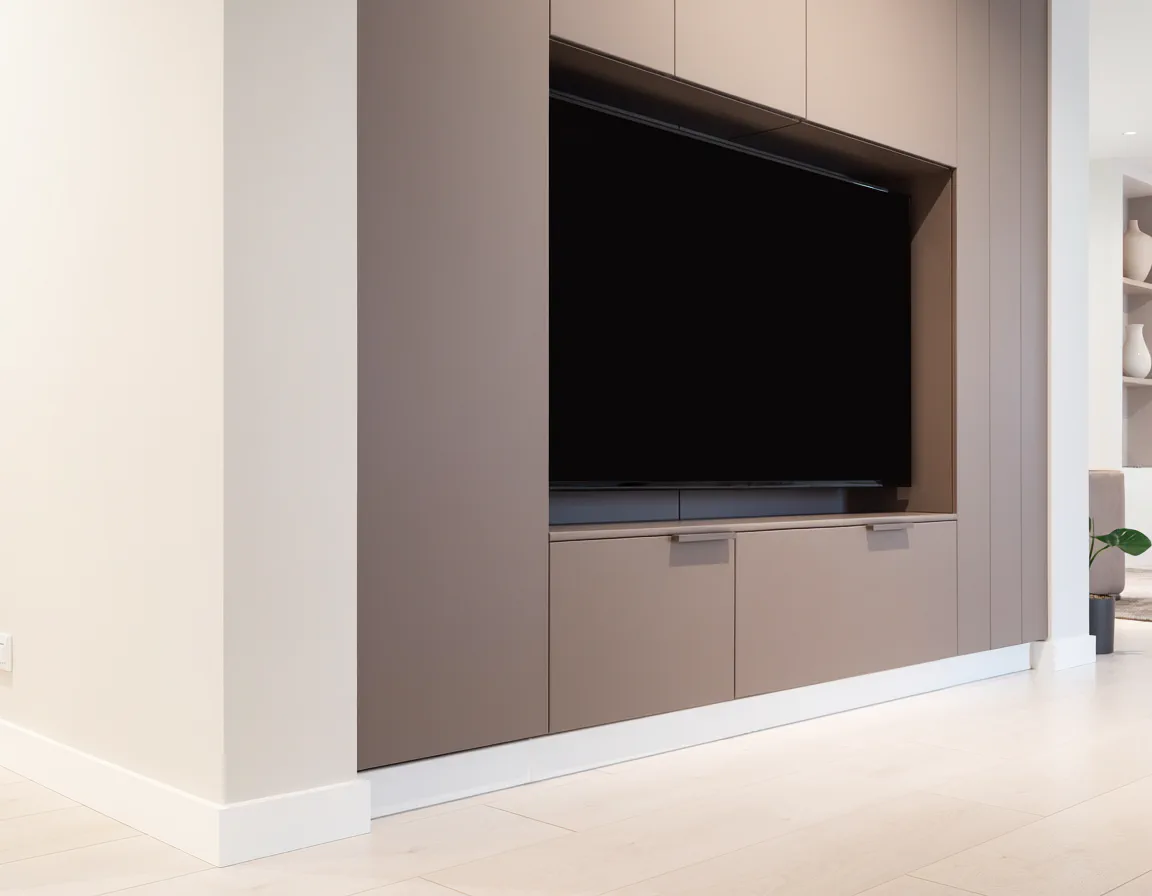
Matched to the house, not added on top of it
The difference between a built-in and a piece of furniture is simple to describe and hard to fake: a built-in is matched to the room’s existing trim, wall depth, and architectural details closely enough that it reads as part of the house rather than something added to it. A stock media console or bookcase, however nice, always reads as furniture sitting in a room. Getting that original-to-the-house look requires actually measuring and matching what’s already there, trim profile, wall depth, baseboard height, rather than building a generic box and trimming around it after the fact.
Media walls: hidden wiring, and why ventilation matters
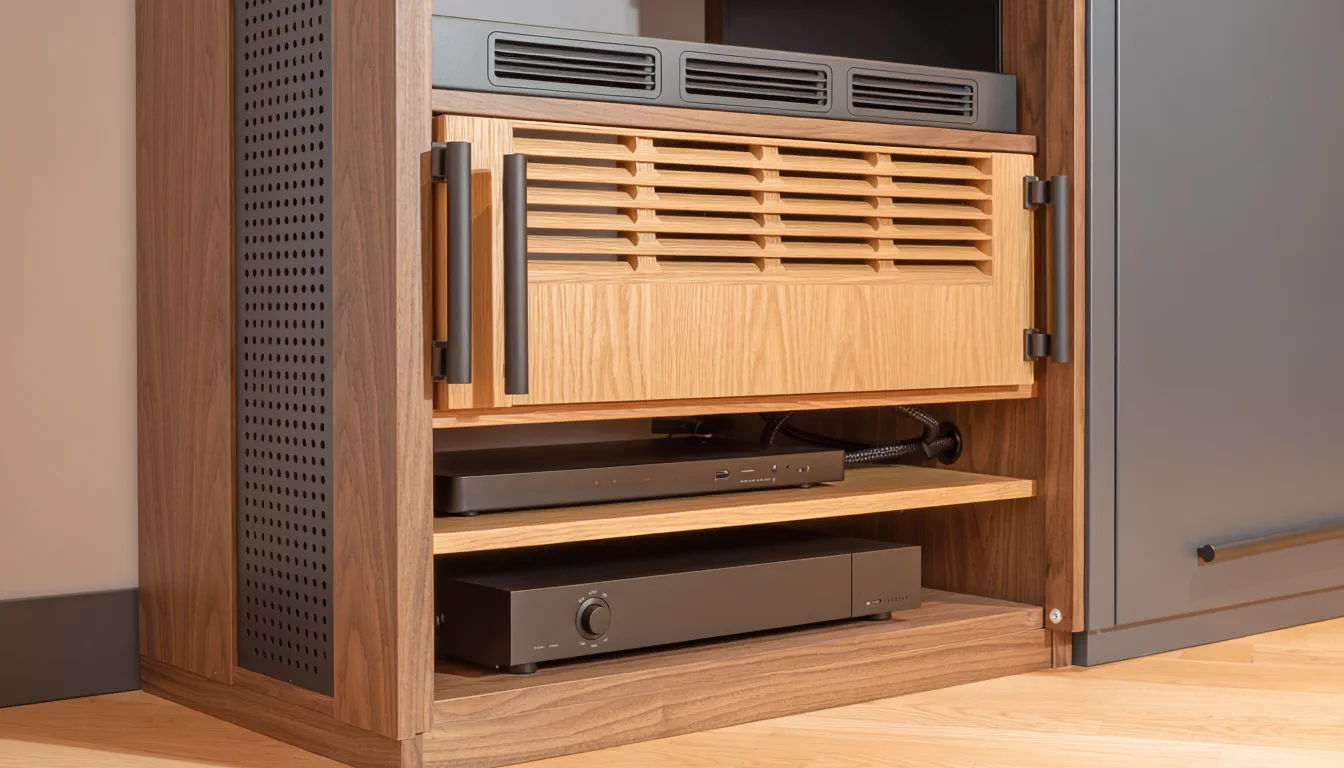
Media walls specifically have moved past the bulky entertainment centers of a decade ago toward something lower-profile and more architectural: floor-to-ceiling cabinetry that conceals wiring entirely, so there’s no visible cable running to a wall-mounted TV or tangled behind a console. The practical side of that design shift matters as much as the look. Gaming consoles, streaming boxes, and AV receivers generate real heat, and sealing them into a cabinet without accounting for that is a good way to shorten their lifespan, especially in a Florida home where ambient temperatures are already working against electronics. Ventilated compartments built into the cabinetry solve that without giving up the clean, hidden-wiring look.
The range of what counts as a built-in
The range is wider than people usually think going in: entertainment centers and media walls, home libraries and bookshelves, window seats with integrated storage underneath, and mudroom or entry built-ins. Each has different structural and trim considerations, but the underlying design approach, measure the room, match the existing details, build to fit rather than fit around, is the same across all of them. Mixed materials, wood-tone panels paired with matte black or warm metal hardware, are showing up more in built-in design generally, and they work well as long as the base cabinetry underneath is still built properly.
Matching Sarasota’s architectural range
Sarasota’s architectural range shows up here more than almost anywhere else on the site. A built-in suited to a Sarasota School midcentury living room, clean lines, minimal trim, a more restrained profile, looks different from one built for a Mediterranean Revival home with more traditional millwork and arched details. Matching the built-in to the house’s actual architectural language is most of what separates a built-in that looks intentional from one that looks mismatched.
We design and build entertainment centers, media walls, home libraries, and window seats matched to your home’s existing trim and architectural style. See our cost guide for how built-in pricing compares to our other services.
What's included
Every built-in starts with matching what's already in the room.
Custom-measured trim matching
Built to your home's existing trim profile, wall depth, and molding, not a generic box trimmed after the fact.
Entertainment centers and media walls
Built into the room rather than added on top of it, with hidden wiring and ventilated space for AV equipment.
Home libraries and bookshelf systems
Sized to the wall and ceiling height of the actual room.
Window seats with storage
Integrated seating and storage, trimmed to match surrounding cabinetry.
Entry and mudroom built-ins
Coat and shoe storage designed for the entry's specific footprint.
Style matching across architecture types
Midcentury, Mediterranean Revival, or coastal contemporary, matched to what the house actually calls for.
Built for the coast
Materials and considerations
Built-ins are more about carpentry and trim-matching precision than climate-specific materials, with one exception worth planning for.
- Interior rooms
- For most built-ins in climate-controlled rooms, material selection is primarily about finish and grain match rather than moisture resistance.
- Media wall ventilation
- Gaming consoles, streaming devices, and AV receivers generate real heat, and Florida's ambient warmth makes that worse in an enclosed cabinet. We build ventilated compartments into media wall cabinetry so equipment doesn't run hot inside a sealed box.
- Humidity-exposed locations
- The same plywood-over-particleboard logic used elsewhere on the site still applies to any built-in near a lanai-facing window or sliding door.
Budget
What custom built-ins cost
Built-in cost is more variable than almost any other service we offer, it depends heavily on scope, size, and trim complexity. A small bookshelf and a full media wall with integrated lighting and hidden cable management are very different projects, and can land anywhere in or beyond the site's typical $2,807-$12,965 project range.
It's worth a consultation for anything beyond a rough estimate. See the general cost guide for how built-ins compare to other services.
Read the full Sarasota cost guideCommon questions
- How much do custom built-ins cost?
- More variable than almost any other service on the site, cost depends heavily on scope, size, and trim complexity. It's worth a consultation for anything beyond a rough estimate.
- Can you match built-ins to my home's existing trim and molding?
- Yes. This is the core of what makes a built-in read as original to the house rather than added on.
- Do you build media walls and entertainment centers?
- Yes, including hidden cable management and ventilated compartments for gaming consoles, streaming devices, and other equipment that generates heat.
- Can you build a window seat with storage?
- Yes, including matching trim on surrounding bookshelves or cabinetry.
- Do you build mudroom or entry built-ins?
- Yes.
- Do built-ins add home value?
- Built-in storage and millwork are generally considered a value-adding feature, though the specific impact varies by home and market.
Where we work
Sarasota and Manatee County, from the barrier islands to the inland communities east of I-75.
- Siesta Key
- Palmer Ranch
- Lakewood Ranch
- Lido & Longboat Key
- Downtown & West of Trail
- Osprey & Nokomis
- Venice
- Gulf Gate
- Bee Ridge